
Neuro20: Transforming Stroke Recovery at Home
What Is a Stroke?
A stroke occurs when blood flow to the brain is blocked by a clot, known as an ischaemic stroke (about 80% of cases), or when a blood vessel bursts, called a haemorrhagic stroke (about 20%) [National Institute of Neurological Disorders and Stroke, 2021, NINDS]. In simple terms, it’s a “brain attack” where brain cells die without oxygen, causing sudden problems like weakness, speech difficulties, or vision loss. In Australia, stroke affects over 50,000 people yearly, making it a leading cause of disability [Stroke Foundation Australia, 2023]. Recovery is challenging, but Neuro20 provides a powerful tool to support the journey.
How Stroke Affects the
Brain and Muscles
The brain controls movement, sensation, and thought. A stroke damages specific areas, disrupting signals to muscles and nerves. For example:
-
-
-
- Motor Cortex Damage: Leads to hemiparesis, weakness or paralysis on one side of the body.
- Sensory Cortex Damage: Causes numbness or tingling.
- Brain-Muscle Disconnect: Without signals, muscles weaken (atrophy) or become stiff (spasticity), leading to pain or limited motion [Hatem et al., 2016, study link].
-
-
In layman’s terms, the brain’s “wiring” to muscles gets disrupted, making tasks like walking or holding objects difficult, often reducing independence and causing discomfort.
Stroke’s Major Challenges: 10 Pain Points for Survivors
Stroke survivors face physical, emotional, and cognitive hurdles. Here are 10 common issues:
Muscle Weakness:
80% experience hemiparesis, limiting arm or leg function [Langhorne et al., 2009, study link].
Chronic Pain:
Neuropathic or shoulder pain affects 30–50% [Harrison & Field, 2015, study link].
Reduced Mobility:
Walking or balance issues increase fall risk for 50%.
Sensory Loss:
Numbness or tingling in 50% impairs sensation.
Cognitive Decline:
Memory or attention issues impact 30–50%.
Spasticity:
Stiff muscles cause pain and restrict movement in 40% of survivors.
Fatigue:
40–70% feel constant exhaustion, hindering daily tasks [Duncan et al., 2012, study link].
Loss of Independence:
Difficulty with dressing, eating, or bathing.
Speech Difficulties:
Aphasia or dysarthria affects 30% [Berthier, 2005, study link].
Emotional Struggles:
Depression or anxiety in 30% due to life changes [Hackett et al., 2005, study link].
Your Path to Recovery: How Neuro20 Helps
The Neuro20 Personal Home Solo Fit System
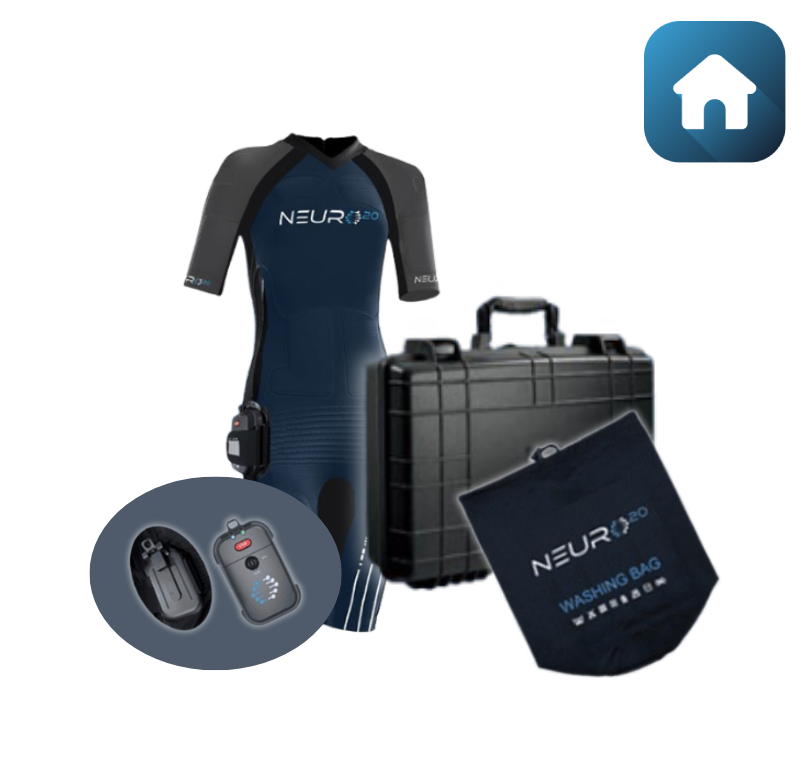
The Neuro20 Personal Home Solo Fit System is an FDA-cleared, wireless suit with 20 electrode zones targeting 42 muscles. It uses four powerful modes to tackle stroke-related issues:
- NMES (Neuromuscular Electrical Stimulation)
- FES (Functional Electrical Stimulation)
- TENS (Transcutaneous Electrical Nerve Stimulation)
- PEMS (Patterned Electrical Muscle Stimulation)
Used 2–3 times weekly for 20 minutes, it’s a convenient, effective, and flexible home-based solution, bringing clinical-grade therapy directly to you.
Directly Addressing Your Stroke Challenges
Here’s how Neuro20 empowers you to overcome the 10 common pain points of stroke recovery.
1. Cognitive Decline:
NMES stimulates motor nerves to rebuild strength [Harvey et al., 2015, study link].
“John, 62, with ischaemic stroke, improved arm strength by 45% after 10 weeks, enabling him to hold a cup“
[Neuro20 White Paper, neuro20.com.au].
2. Spasticity
FES reduces muscle tightness by promoting controlled movements [Popovic et al., 2015, study link].
“My leg spasticity eased after a month, and I can stretch more comfortably.” – Linda, 57
3. Chronic Pain
TENS blocks pain signals and releases endorphins [Ng & Hui-Chan, 2007, study link].
“Sarah, 65, reduced shoulder pain by 50% after 8 sessions, improving sleep quality.
4. Fatigue
NMES enhances muscle efficiency, reducing energy demands [Biasiucci et al., 2018, study link]. Users report less exhaustion during daily activities.
5. Reduced Mobility
FES improves gait and coordination [Stein et al., 2010, study link].
“Mark, 59, with haemorrhagic stroke, walked 60% further after 12 sessions.”
6. Loss of Independence
NMES/FES supports tasks like dressing [Knutson et al., 2015, study link].
“I can button my shirt now, which has boosted my confidence.”
7. Sensory Loss
TENS enhances sensation in numb areas [Santos et al., 2013, study link]. Users note improved touch sensitivity.
8. Speech Difficulties
While Neuro20 focuses on physical recovery, better function may support speech therapy [Vines et al., 2011, study link].
“I have more energy for speech therapy sessions.” – Jane, 64
9. Cognitive Decline
FES boosts BDNF, aiding cognitive health [Mang et al., 2013, study link].
“Tom, 66, reported sharper focus after 3 months.”
10. Emotional Struggles
Physical gains lift mood [Winstein et al., 2016, study link].
“Feeling stronger has made me hopeful again.” – Emma, 61
Why Neuro20 Stands Apart
Backed by science, proven by results, and designed for your confidence.
Why Neuro20 Is Different from Pharmacy EMS Machines
Unlike basic EMS devices found in drugstores, which focus on fitness or mild pain relief, the Neuro20 Personal Home Solo Fit System is an advanced rehabilitation tool designed for neurological recovery. The Neuro20 Pro System, used by professionals in clinics worldwide, underwent rigorous FDA testing and approval for safety and efficacy in treating conditions like stroke [Neuro20 White Paper]. The Home System mirrors the Pro System’s NMES/FES/TENS/PEMS technology, delivering clinical-grade therapy in a user-friendly format. Controlled via a simple phone app, it requires no complex setup, making it ideal for home use. Drugstore EMS machines lack this precision, FDA clearance, and focus on neuroplasticity, setting Neuro20 apart as a trusted, professional-grade solution.
The Science Behind Neuro20
Stroke recovery relies on neuroplasticity, the brain’s ability to rewire itself [Kleim & Jones, 2008, study link]. Neuro20 supports this by:
-
- Muscle Stimulation: NMES/FES mimics natural movements, strengthening brain-muscle pathways.
- Pain Relief: TENS reduces discomfort, enhancing quality of life.
- Circulation: PEMS aids tissue repair [Dimitrijevic et al., 1996, study link].
“After my stroke, walking felt impossible. Neuro20 helped me take steps again in three months.” – Michael, 68, stroke survivor
Detailed Case Studies and User Reviews
Case Study 1:
Helen, 60 (Ischaemic Stroke)
- Background: Left-side hemiparesis, unable to lift arm post-stroke.
- Therapy: 3x weekly Neuro20 sessions for 12 weeks.
- Outcomes: 55% arm strength increase, resumed knitting, reduced spasticity [Neuro20 White Paper].
Case Study 2:
David, 72 (Haemorrhagic Stroke)
- Background: Leg weakness, high fall risk.
- Therapy: 2x weekly sessions for 10 weeks.
- Outcomes: 50% mobility gain, walked 200m unaided, less fatigue.
Case Study 3:
Sophie, 54 (Ischaemic Stroke)
-
Background: Right-side weakness, difficulty grasping objects.
-
Therapy: 3x weekly sessions for 8 weeks.
-
Outcomes: 40% hand strength improvement, able to hold utensils, reduced pain.
Case Study 4:
Liam, 67 (Multiple Sclerosis)
- Background: Leg spasticity and fatigue, using a cane.
- Therapy: 2x weekly sessions for 12 weeks.
- Outcomes: 45% mobility increase, reduced stiffness, less reliance on cane.
Case Study 5:
Rachel, 49 (Spinal Cord Injury)
- Background: Partial paralysis in legs post-injury.
- Therapy: 3x weekly sessions for 10 weeks.
- Outcomes: 50% leg strength gain, improved transfers, less neuropathic pain.
Case Study 6:
Greg, 71 (Ischaemic Stroke)
- Background: Balance issues, frequent falls.
- Therapy: 2x weekly sessions for 14 weeks.
- Outcomes: 60% balance improvement, no falls in 2 months, enhanced confidence.
STROKE PATIENT WALKING AGAIN
Neuro20 vs. Weekly Physiotherapy: A Cost Comparison
Weekly Physiotherapy
Weekly physiotherapy at $100–$150 per session adds up significantly over time:
- 1 Year: 52 sessions at $125 average equates to an estimated $6,500.
- 2 Years: This rises to a substantial $13,000.
- Inconvenience: Requires regular travel and strict appointment scheduling.
- Consistency Challenges: Dependent on availability and personal commitments.
Neuro20
Neuro20 offers a streamlined, cost-effective solution for consistent therapy right at home:
-
- Cost: A one-time purchase of just $4,499.
- Flexible Payment: Or approximately ~$79.09/week with Humm.
- Risk-Free Trial: Backed by a 30-day money-back guarantee.
- Unmatched Convenience: Provides long-term savings and home convenience.
- Consistent Therapy: Enjoy therapy without the need for travel or appointments.
- Complementary Use: Can complement existing physiotherapy, potentially reducing session frequency and overall costs.
Neuro20 One-Time Investment
Secure your comprehensive home recovery system for:
$4,499
One-time payment
With a 30-day money-back guarantee!
Neuro20 offers long-term savings, unparalleled home convenience, and consistent, clinical-grade therapy without the hassle of travel or appointments. It’s a powerful complement to traditional physio, potentially reducing the frequency of in-clinic sessions.
Ready to Reclaim Your Life?
Take the first step towards a stronger, more independent future with Neuro20.
What’s Included in Your Neuro20 Home System
- Smart Suit: Antimicrobial, machine-washable, with 20 electrode zones for comprehensive coverage.
- Control Box: Portable and Bluetooth-enabled for easy, wireless control.
- Phone App: Simple, intuitive interface for complete session control from your smartphone.
- Accessories: Includes a wash bag, batteries, and charger.
- Comprehensive Support: Enjoy a 12-month warranty, a 30-day money-back guarantee, and three free 30-minute EMS specialist sessions (video or in-person in Wollongong) to get you started confidently.
Affordable Payment Options
The Neuro20 system is accessible with flexible plans:
- Credit Card or Bank Transfer: Total: $4,499.
- Humm: ~$69.44/week or ~$300.88/month for 12 months after a $789.80 deposit.
- Payright: ~$74.77/week or ~$324.00/month for 12 months after a $394.90 deposit.
- ZipMoney: ~$82.97/week (48 weeks) or ~$362.04/month (11 months) after a $345.54 deposit.
- NDIS Funding: May cover part or all of $4,499, but requires a complex, lengthy approval process.
We are happy to arrange an invoice or split payments to suit your needs. Contact us to discuss options.
Next Steps: Book Your Free Consultation
Explore Neuro20 or try the suit. Your recovery journey starts here: