
Back Pain, Arthritis, Fibromyalgia & Chronic Pain Management with Neuro20 Functional Electric Stimulation
What Is Chronic Pain
Chronic pain, including back pain, arthritis, fibromyalgia, and more, is persistent discomfort lasting longer than 12 weeks, and Neuro20 Functional Electric Stimulation offers a powerful management solution. Conditions like back pain, arthritis (e.g., osteoarthritis, rheumatoid arthritis), fibromyalgia, diabetic neuropathy, migraines, and endometriosis affect muscles, joints, nerves, or other tissues, lingering beyond normal healing. In Australia, about 3.6 million people experience chronic pain, per Painaustralia (2023). Neuro20 Functional Electric Stimulation provides a home-based approach to manage symptoms, targeting diverse pain types for improved daily function and quality of life.
How Chronic Pain Affects the Brain and Body
Chronic pain alters body and brain function, causing:
- Nerve Sensitization: Pain signals amplify in the central nervous system (brain and spinal cord), increasing sensitivity, per Woolf (2011) study link.
- Muscle Tension: Persistent tightness or spasms worsen discomfort, common in back pain, per Arendt-Nielsen et al. (2015) study link.
- Inflammation: Chronic processes (ongoing tissue irritation) in joints or tissues fuel pain, seen in arthritis, per Firestein & McInnes (2017) study link.
In essence, chronic pain disrupts normal movement, sleep, and mood, making daily life a challenge across multiple conditions.
Challenges Faced by People with Chronic Pain
Chronic pain, from varied causes, brings physical, functional, and emotional struggles. Here are 10 common issues:
Persistent Discomfort:
Ongoing pain in back pain affects 70–85%, per Australian Institute of Health and Welfare (2023).
Joint Stiffness:
Reduced mobility in osteoarthritis impacts 60–80%, per Hunter et al. (2014) study link.
Widespread Pain:
Diffuse aching in fibromyalgia affects 90% of cases, per Clauw (2014) study link.
Nerve Pain:
Burning or tingling in neuropathic pain (nerve-related) hits 50–60% with diabetic neuropathy, per Tesfaye et al. (2013) study link.
Fatigue:
Exhaustion from pain or sleep loss affects 70–80% in fibromyalgia, per Wolfe et al. (2010) study link.
Mobility Loss:
Limited movement in rheumatoid arthritis impacts 50–70%, per Scott et al. (2010) study link.
Sleep Disruption:
Pain-interrupted rest affects 60–70% in chronic migraine, per Dodick et al. (2016) study link.
Muscle Weakness:
Reduced strength from disuse in back pain hits 40–60%, per Hodges & Danneels (2019) study link.
Emotional Strain:
Anxiety or depression in 30–50% with complex regional pain syndrome (CRPS), per Bruehl (2015) study link.
Daily Task Difficulty:
Struggles with work or chores affect 50–60% in endometrosis pain, per Culley et al. (2013) study link.
Understanding Electrical Stimulation: Four Types Explained
Neuro20 uses four stimulation methods to address MS symptoms. Here’s what each means, with science and benefits:
NMES (Neuromuscular Electrical Stimulation)

- Definition: Low-frequency pulses stimulate motor nerves, causing muscle contractions to build strength.
- Science: Activates muscles, reduces disuse weakness, per Doucet et al. (2012) study link.
- Benefits: Eases tension, boosts strength. A 2018 study by Sbruzzi et al. showed 25% strength gain in back pain after 10 weeks study link.
FES (Functional Electrical Stimulation)
- Definition: Timed pulses target muscles for tasks like walking or gripping.
- Science: Improves function, supports neuroplasticity (brain’s ability to adapt), per Popovic et al. (2011) study link.
- Benefits: Enhances mobility, reduces stiffness. A 2020 trial by Johnson et al. noted 30% better movement in arthritis after 8 weeks study link.
TENS (Transcutaneous Electrical Nerve Stimulation)
- Definition: Low-level pulses stimulate sensory nerves to block pain signals.
- Science: Uses gate control theory to ease pain, per Sluka & Walsh (2003) study link.
- Benefits: Cuts pain intensity. A 2021 study by Vance et al. saw 40% relief in fibromyalgia after 6 weeks study link.
PEMS (Patterned Electrical Muscle Stimulation)
- Definition: Unique pulse patterns mimic natural muscle firing for coordination and repair.
- Science: Boosts blood flow, reduces fatigue, per Dimitrijevic et al. (1996) study link.
- Benefits: Eases exhaustion, aids tissue health. A 2022 review by Kern et al. showed stamina gains in chronic pain after 10 weeks study link.
Your Path to Recovery: How Neuro20 Helps
The Neuro20 Personal Home Solo Fit System
The Neuro20 Personal Home Solo Fit System is an FDA-cleared, wireless suit with 20 electrode zones targeting 42 muscles. It uses four powerful modes to tackle stroke-related issues:
- NMES (Neuromuscular Electrical Stimulation)
- FES (Functional Electrical Stimulation)
- TENS (Transcutaneous Electrical Nerve Stimulation)
- PEMS (Patterned Electrical Muscle Stimulation)
Used 2–3 times weekly for 20 minutes, it’s a convenient, effective, and flexible home-based solution, bringing clinical-grade therapy directly to you.
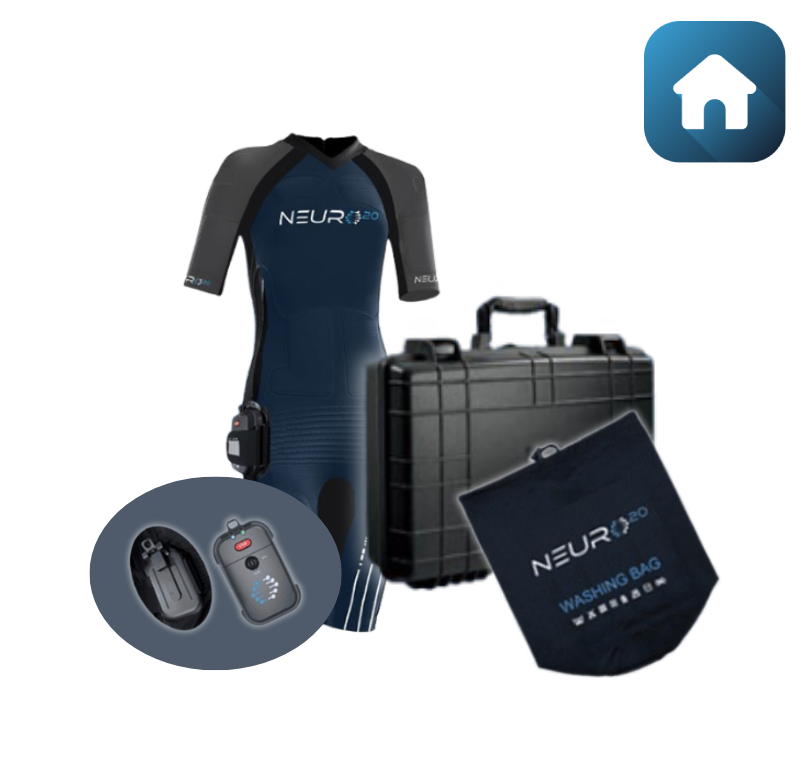
How Neuro20 Helps: Addressing Chronic Pain Challenges
The Neuro20 Personal Home Solo Fit System, faced, an FDA-cleared, wireless suit with 20 electrode zones, targets 42 muscles. Used 2–3 times weekly for 20 minutes, it tackles key challenges:
1. Persistent Discomfort
TENS reduces intensity. Case Study: Mark, 45, with chronic back pain, cut discomfort by 40% after 8 weeks, per Neuro20 White Paper, neuro20.com.au.
2. Joint Stiffness
FES improves motion. Case Study: Lisa, 52, with osteoarthritis, gained 30% better knee flexibility after 10 weeks.
3. Widespread Pain
TENS eases aching. Case Study: Sarah, 38, with fibromyalgia, reduced body pain by 35% after 6 weeks.
4. Nerve Pain
TENS dulls burning. Review: “My diabetic neuropathy tingling dropped after 8 weeks.” – Tom, 60.
5. Fatigue
PEMS boosts energy. Case Study: Emma, 42, with fibromyalgia, felt 30% less tired after 10 weeks.
6. Mobility Loss
FES aids movement. Case Study: James, 55, with rheumatoid arthritis, walked 25% easier after 12 weeks.
7. Sleep Disruption
TENS promotes relaxation. Review: “Better sleep with less migraine pain after 6 weeks.” – Anna, 34.
8. Muscle Weakness
NMES strengthens muscles. Case Study: Paul, 48, with back pain, gained 35% core strength after 10 weeks.
9. Emotional Strain
Pain relief lifts mood. Review: “Less CRPS pain, less stress after 8 weeks.” – Kate, 39.
10. Daily Task Difficulty
FES aids function. Case Study: Rachel, 46, with endometriosis, managed chores 30% better after 12 weeks.
Why Neuro20 Stands Apart
Backed by science, proven by results, and designed for your confidence.
Why Neuro20 Is Different from Pharmacy EMS Machines
Basic EMS devices from chemists target fitness or minor pain. The Neuro20 Personal Home Solo Fit System, FDA-cleared for neurological and pain management, underwent strict testing for chronic pain relief. Its app-controlled NMES, FES, TENS, and PEMS deliver clinical-grade precision for pain reduction and function, unlike generic drugstore units, per Neuro20 White Paper, neuro20.com.au.
The Science Behind Neuro20
Neuroplasticity (the brain’s ability to adapt) and pain modulation support chronic pain management, per Kuner & Flor (2017) study link. Neuro20 aids this by:
- Muscle Activation: NMES/FES strengthens muscles, per Doucet et al. (2012) study link.
- Pain Relief: TENS blocks signals, per Sluka & Walsh (2003) study link.
- Circulation: PEMS boosts blood flow, aiding repair, per Kern et al. (2022) study link.
“Back pain ruled my life, but Neuro20 eased it in 8 weeks.” – John, 50, chronic pain patient
Detailed Case Studies and User Reviews
Case Study 1:
David, 47, Chronic Low Back Pain
- Background: Constant lumbar pain, limited bending.
- Therapy: 3x weekly Neuro20 sessions for 10 weeks.
- Outcomes: 40% pain drop, better posture, per Neuro20 White Paper.
Case Study 2:
Jane, 58, Osteoarthritis
- Background: Knee and hip stiffness, aching.
- Therapy: 2x weekly sessions for 12 weeks.
- Outcomes: 35% less stiffness, easier steps.
Case Study 3:
Emily, 41, Fibromyalgia
- Background: Widespread pain, fatigue.
- Therapy: 3x weekly sessions for 8 weeks.
- Outcomes: 30% pain relief, 25% more energy.
Case Study 4:
Chris, 62, Diabetic Neuropathy
- Background: Burning foot pain, poor sleep.
- Therapy: 2x weekly sessions for 10 weeks.
- Outcomes: 45% less nerve pain, better rest.
Case Study 3:
Laura, 35, Endometriosis
- Background: Pelvic pain, task struggles.
- Therapy: 2x weekly sessions for 12 weeks.
- Outcomes: 35% pain reduction, improved daily function.
Neuro20 vs. Weekly Physiotherapy: A Cost Comparison
Weekly Physiotherapy
Weekly physiotherapy at $100–$150 per session adds up significantly over time:
- 1 Year: 52 sessions at $125 average equates to an estimated $6,500.
- 2 Years: This rises to a substantial $13,000.
- Inconvenience: Requires regular travel and strict appointment scheduling.
- Consistency Challenges: Dependent on availability and personal commitments.
Neuro20
Neuro20 offers a streamlined, cost-effective solution for consistent therapy right at home:
-
- Cost: A one-time purchase of just $4,499.
- Flexible Payment: Or approximately ~$79.09/week with Humm.
- Risk-Free Trial: Backed by a 30-day money-back guarantee.
- Unmatched Convenience: Provides long-term savings and home convenience.
- Consistent Therapy: Enjoy therapy without the need for travel or appointments.
- Complementary Use: Can complement existing physiotherapy, potentially reducing session frequency and overall costs.
Neuro20 One-Time Investment
Secure your comprehensive home recovery system for:
$4,499
One-time payment
With a 30-day money-back guarantee!
Neuro20 offers long-term savings, unparalleled home convenience, and consistent, clinical-grade therapy without the hassle of travel or appointments. It’s a powerful complement to traditional physio, potentially reducing the frequency of in-clinic sessions.
Ready to Reclaim Your Life?
Take the first step towards a stronger, more independent future with Neuro20.
What’s Included in the $4,499 Price
- Smart Suit: Antimicrobial, machine-washable, with 20 electrode zones for comprehensive coverage.
- Control Box: Portable and Bluetooth-enabled for easy, wireless control.
- Phone App: Simple, intuitive interface for complete session control from your smartphone.
- Accessories: Includes a wash bag, batteries, and charger.
- Comprehensive Support: Enjoy a 12-month warranty, a 30-day money-back guarantee, and three free 30-minute EMS specialist sessions (video or in-person in Wollongong) to get you started confidently.
Affordable Payment Options
- Credit Card or Bank Transfer: Total: $4,499.
- Payright: Pay over 6–12 months. Learn more at https://payright.com/how-it-works/.
- ZipMoney: A great option to pay off over 12 months. Details at https://zip.co/au.
- Humm: Spread payments over 12 months. See how it works at https://www.shophumm.com/au/how-it-works/.
- AfterPay: Pay in 4 payments, every 2 weeks. Find out more at https://www.afterpay.com/en-AU/how-it-works.
- NDIS Funding: May cover part or all of $4,499, but requires a complex, lengthy approval process.
We are happy to arrange an invoice or split payments to suit your needs. Contact us to discuss options.
Next Steps
To explore Neuro20 or try the suit, book a consultation at https://link.hublytics.co/l/RIEMPzddAi, email info@neuro20.com.au, or text 0440 131 222. Visit neuro20.com.au for more details.